Why Melasma Is Managed, Not Erased: What to Know Before a Korea Visit
Melasma can darken again after it fades, triggered by sunlight or hormonal change, so a long-term plan is more realistic than expecting one trip to clear it. Here is what to ask in a Korean consultation, how to plan your stay, and who carries on the care once you are home.

Melasma is better thought of as a skin condition you manage over time than something a single session clears away. Even after it fades with treatment, it often darkens again with sun exposure or hormonal change. DermNet, the New Zealand dermatology reference, describes melasma as chronic and relapsing, and the American Academy of Dermatology (AAD) says treatment usually takes 3 to 12 months to show results, sometimes longer when the melasma has been there for years. That is why a few days in Korea is rarely enough to see where things will land.
Mediport is not a medical provider. This article does not tell you how to diagnose or treat your skin. It covers what is worth knowing before a consultation in Korea, and how to prepare your schedule and the handover once you fly home. What your pigmentation actually is, and which approach suits it, is for the doctor who examines you to decide.
How melasma differs from other brown spots
People tend to call every brown patch on the face "melasma" or just "pigmentation," but dermatologists separate several types. The reason is practical: each type reacts to sunlight differently and comes back in a different way. The table below simplifies how published dermatology references usually describe them. The real call is made in the clinic.
| Type | What it usually looks like | What tends to darken it | How it behaves over time |
|---|---|---|---|
| Melasma | Brown patches spread fairly symmetrically across the cheeks, forehead or upper lip | Sunlight (UV and visible light), hormonal change such as pregnancy or the contraceptive pill | Often darkens again after fading, so long-term care is usually needed |
| Freckles | Many small dots, often present since childhood | Sunlight | Darker in summer, lighter in winter |
| Solar lentigo (sun spot) | A brown spot with a fairly clear edge on sun-exposed areas such as the face or backs of the hands | Years of accumulated sun exposure | Does not fade much between seasons; sun protection still matters after treatment |
| Post-inflammatory hyperpigmentation | A mark left where there was acne, a wound or irritation | Inflammation, rubbing, or irritation from a procedure | Often fades with time, though it tends to last longer on darker skin |
It is common for one face to have two or more of these at once. So the first thing to settle in a consultation is not what to do, but what each of those spots actually is.
Why the depth of the pigment matters
Skin has an outer layer, the epidermis, and a deeper layer beneath it, the dermis. DermNet groups melasma by where the pigment mainly sits: epidermal, dermal, or mixed, with mixed being the most common. It describes epidermal melasma as having a clearer edge and responding better to treatment, and dermal melasma as having blurred edges, a bluish grey-brown tone and a slower response.
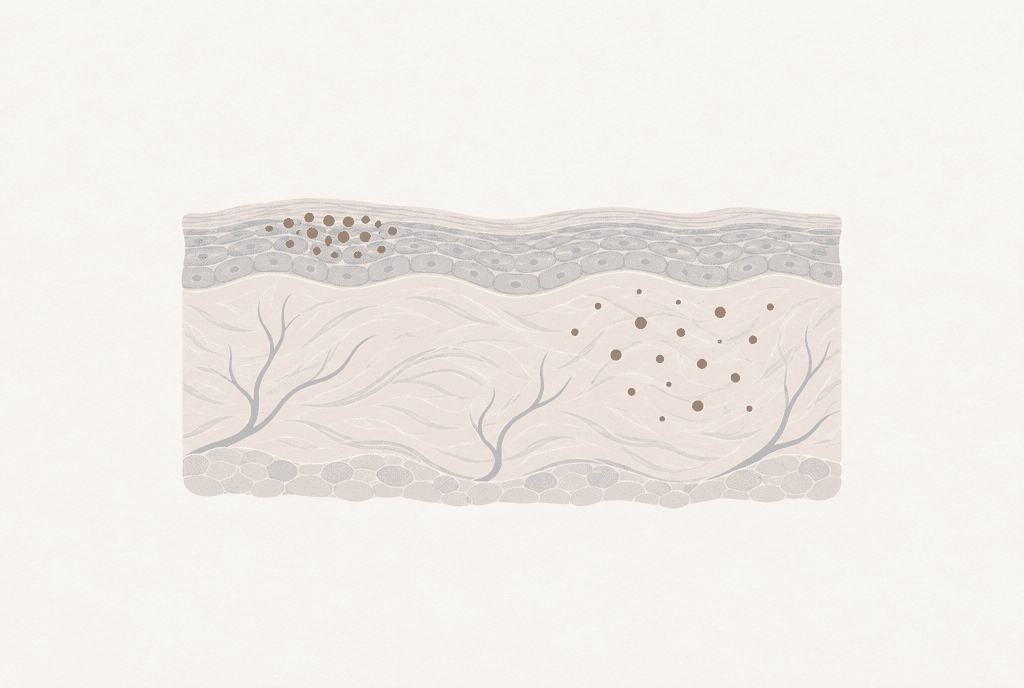
For you as a patient, the takeaway is straightforward. Two people with melasma can expect different degrees of change over different lengths of time. Clinics sometimes use a Wood's lamp (a special light) or a dermatoscope to estimate the depth. Asking directly, "Which type does mine look closer to?" makes it much easier to set your schedule and your expectations.
What makes melasma darken again
Melasma is called a management problem because the things that darken it are still part of daily life after treatment ends. The factors that published dermatology sources keep coming back to are:
- Sunlight. Research suggests visible light plays a part, not only UV. DermNet notes that pigmentation can reappear with summer sun even in people who had a good result from treatment.
- Hormonal change. Pregnancy, the contraceptive pill and hormone replacement therapy are listed as triggers.
- Some medications, heavily fragranced cosmetics and thyroid conditions are also mentioned.
- Irritation. Strong irritation can add post-inflammatory hyperpigmentation on top of melasma.
Melasma also tends to run in families, which points to an inherited element. Of all these, sunlight is the one that ties directly to your travel plans. If you have long outdoor sightseeing days planned right after a procedure, or you are heading straight home to a very sunny climate, mention it at the consultation.
Questions to ask at the consultation
How laser toning works and what types exist are covered separately in our guide to pigmentation and melasma laser treatment in Korea. Here we focus on the questions worth asking when you look at melasma as long-term care.
- Which of the spots on my face are melasma, and which are a different kind of pigmentation?
- If it is melasma, does it look closer to the epidermal, dermal or mixed type?
- What can be done on this visit, and what would need to be spread over several sessions?
- How likely is it that irritation makes the pigment darker, and what would you do if that happens?
- If I am given creams or tablets to use at home, can I get them in my country?
- When is the next check, and how would it happen: another visit, a video consultation, or a local clinic?
DermNet notes that lasers and similar procedures are used for melasma but carry a high risk of relapse, and should be used carefully by experienced doctors. That is why we suggest not skipping the fourth question. Once you have heard the explanation, whether to go ahead, and how far, is your decision.
Planning your stay in Korea
Rather than trying to finish everything in a few days, build your melasma trip around what you want to have decided by the time you leave. A common pattern is to get a diagnosis and a plan on the first visit, then decide whether to continue at home or come back to Korea. We explain how that choice is usually made in One Trip or Two: How the Decision Actually Gets Made.
| When | What happens | What to have ready |
|---|---|---|
| Before you travel | A photo consultation to get a rough sense of your skin and what schedule is realistic | Front and side photos taken in even light, a list of current medications, whether you are planning a pregnancy |
| First visit | Examination, identifying the type of pigmentation, deciding whether and how to treat | Records of any past treatment, how many days you are staying, your plans after returning home |
| During your stay | If the doctor decides on a procedure, the procedure and a follow-up check | A schedule that lets you stay out of strong sun, the clinic's contact details |
| The months after you return | Checking progress and deciding whether to continue or adjust | Dated photos, the prescriptions and written instructions you were given |
| When the seasons change | Seeing whether the pigment darkens again around summer | Photos taken in the same light and from the same angle |
These points in time are only a common pattern. The actual intervals and number of sessions are set by the clinic that treats you.
Who carries on the care after you go home
Most melasma care happens where you live, not in Korea. So there are a few documents to collect before you leave: what type of pigmentation you were diagnosed with, what was done and when, the medications prescribed and how to use them, when the next check should be, and who to contact. With these, a dermatologist at home can pick up where the Korean clinic left off. Ask for prescriptions to be written with the active ingredient names, so you can find the same ingredients locally.
Sun protection is a constant in melasma care. The AAD mentions sunscreens containing zinc oxide, titanium dioxide or iron oxide, and tinted sunscreens, for people with melasma. DermNet advises a broad-spectrum SPF50+ containing iron oxides all year round, along with a broad-brimmed hat. A randomized trial in France found fewer relapses in the group using a tinted sunscreen that also blocked visible light. Even so, which product to use and how to use it should follow the instructions of the clinic that treated you.
What Mediport does
We do not provide medical care. We pass your pre-trip photo consultation to the clinic, work with the interpreter during the consultation so the questions above get asked, and check with you before you fly home that you have documents showing the diagnosis, prescriptions and the next check date. After you return, you can send us progress photos; we forward them to the clinic and relay the reply in your language. Whether to treat, and how, is always decided by the medical provider and by you.
Frequently asked questions
- Q. Can one trip to Korea get rid of melasma?
- A. It is more realistic not to plan around a single trip. The AAD says melasma treatment usually takes 3 to 12 months to show results, and even after it fades it can darken again with sunlight or hormonal change. Treat your first visit as the time to get a diagnosis and a plan.
- Q. Can laser treatment make melasma darker?
- A. Yes, this has been reported. Irritation can lead to post-inflammatory hyperpigmentation, or the melasma can return, which is why the doctor chooses the method, intensity and interval based on your skin. Ask about this possibility, and what would be done if it happens, during the consultation.
- Q. What should I bring home from the clinic?
- A. Written records of the diagnosis, the procedures and dates, prescribed medications with their active ingredient names and instructions, the next check date and a contact point. These let a local dermatologist continue your care. Follow the treating clinic's advice on which sunscreen to use and how.
- Q. Is there a better time of year to go for a melasma consultation?
- A. There is no fixed ideal time. But because melasma darkens easily with sunlight, how well you can avoid strong sun in the weeks after a procedure affects the schedule. Tell the doctor about your travel plans and your life after returning, such as outdoor activities and the season, so they can take it into account.
This article is for general information only. Results vary by individual, and whether a procedure is suitable is a physician's decision. Please ask in a free consultation for details.
Related articles
Acne and Acne Scar Treatment in Korea: A Comprehensive Guide to Types, Management, and Recovery
DermatologyPigmentation & Melasma Laser Treatment in Korea: A Comprehensive Guide to Laser Toning Procedures, Types, and Recovery
DermatologyBotulinum Toxin (Botox) Treatment Guide in Korea: Areas, Effects, Duration & Precautions
DermatologyHow consultation & interpretation work
Start with a free consultation
Tell us your goals, schedule and concerns. We'll reply within 24 hours, in your language.
Start a free consultation