First Clinic Visit in Korea: Check-in to Consent, Step by Step
A first visit to a Korean clinic usually runs in this order: check-in and passport, intake form, photos and tests, consultation, consent form, then payment and confirming your bookings. This guide covers what to bring and ask at each step, how to ask about photo use and privacy, and when same-day treatment may be postponed.

A first visit to a Korean clinic usually follows this order: check-in and a passport check, the intake form, photos and any tests, a consultation with the doctor, an explanation of the consent form, and finally payment and confirming your next dates. Whether you can have a procedure that same day is up to the medical team, who decide after looking at your examination, the type of procedure, and any medication you take, so if you treat the first day as a consultation-and-tests day, your schedule is less likely to be thrown off. This guide walks through what happens on the day, in what order, and what to ask at each step.
Mediport is not a medical provider. The order of care, whether a procedure goes ahead, and medical fees are decided by the medical institution. Mediport does not recommend procedures or clinics, and does not set or compare prices. Clinics differ a little in their order and in what they call each step, so read the following as a common pattern. The law described here is the text in force as checked on Korea's National Law Information Center (law.go.kr) on November 5, 2026.
The first visit at a glance
What happens on a first visit falls into six broad steps. The later steps depend on whether the day is a consultation only or also has a procedure booked.

| Step | What the clinic does | What to bring or do |
|---|---|---|
| Arrival and check-in | Confirms your identity, registers you as a patient, explains the forms to fill in | Passport, booking confirmation message, a number where you can be reached in Korea |
| Intake form | Checks your medical history, current medication, allergies, past surgery and procedures | A medication list written by ingredient name, previous medical records |
| Photos and tests | Takes photos for your medical record and runs any tests the procedure needs | Ask what the photos are for; check in advance whether you need to remove makeup |
| Consultation | The doctor examines you and explains possible options, risks, scheduling and preparation | Questions written in advance, an interpreter, a way to take notes |
| Consent form | Explains the procedure, side effects and what you need to follow, then asks for your signature | Time to read it, a request for a copy |
| Payment and confirming dates | Takes payment, confirms the procedure date and follow-up visits, explains precautions | Payment method, your return flight date |
The order can change. Some clinics take photos after the consultation, or run tests on a separate day. How many hours it takes depends on the clinic and the procedure, so asking when you book gives you a more accurate answer. If you plan to visit several clinics on the same day, leave plenty of time for the first one.
Arrival and check-in: passport, intake form, medication
At the reception desk, staff first confirm your identity and register you as a patient. Foreign patients are often asked to show their passport, so do not leave it at your hotel. The English name you write at check-in is carried over as-is to your receipts, medical certificates and consent form. If you check here that the spelling matches your passport, you are less likely to need documents corrected for an insurance claim after you get home. Give them a phone number or messaging account where you can be reached in Korea, too. Test results and schedule changes will be sent there.
Next comes the intake form. It asks about current conditions, medicines and supplements you take, allergies, past surgery and procedures, and whether you could be pregnant. If there is no form in your language, fill it in line by line through an interpreter. If you cannot remember something, writing "not sure" and explaining it in the consultation is better than leaving it blank or writing "none."
Be especially careful with your medication. The American Society of Plastic Surgeons (ASPS) explains that when preparing for surgery you may be told to avoid aspirin, anti-inflammatory drugs and herbal supplements, because they can increase bleeding and bruising. If these are missing from your intake form, it can affect the decision about whether to go ahead that day. Do not stop any medicine on your own, though. Whether you can stop is for the doctor who prescribed it and the medical team doing the procedure to decide. How to list medicines by ingredient name, and which documents are worth sending ahead, are covered in Medical History and Medications: What to Prepare Before Your Consultation. On the day, just bring that list on paper or on your phone to the reception desk.
Photos and privacy: what to ask in advance
In aesthetic and cosmetic surgery care, it is common to photograph your face or the treatment area before and after the consultation. ASPS also notes that the doctor takes photographs for your medical record during the consultation. These photos record your current condition, help plan the procedure, and are used later to compare your progress. They are usually taken from several angles, front and side, and you may be asked to remove makeup or jewelry.
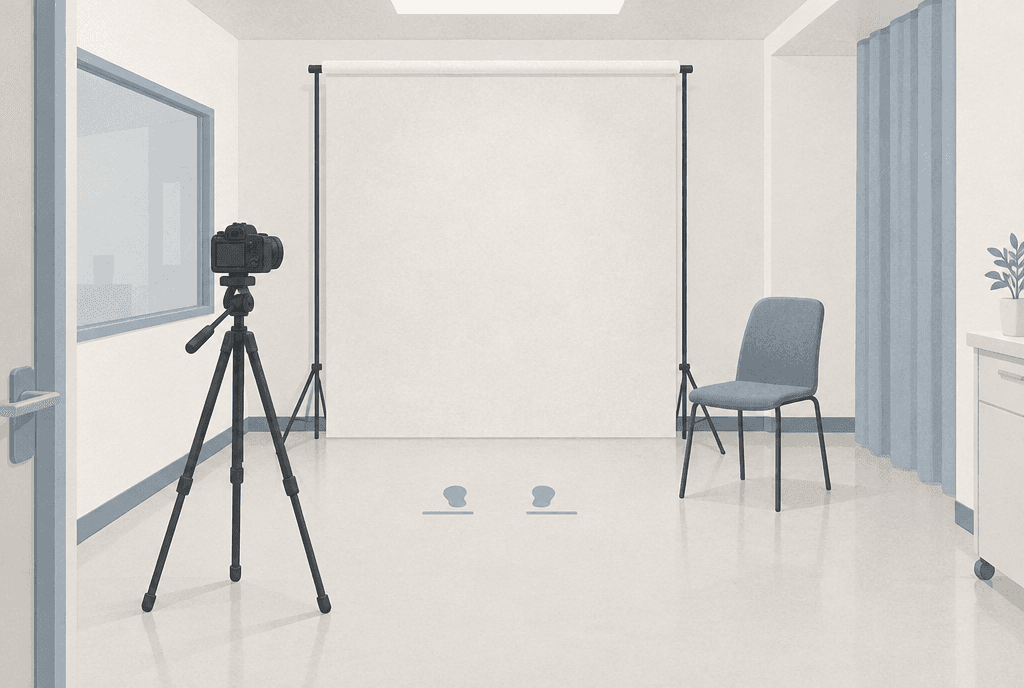
What the photos will be used for is a fair question. Photos kept in your medical record and photos used to promote the clinic are separate matters. Korea's Personal Information Protection Act provides that using personal information beyond the purpose for which it was first collected generally requires the person's separate consent, and that when asking for that consent, the purpose of use, the items, the retention period, and the right to refuse consent must be disclosed (Article 18). The same law treats health information separately as sensitive information (Article 23). If you are handed a consent form for using photos in promotion or case presentations, check whether it is separate from the consent form for your treatment, and ask what happens if you do not sign. The Medical Service Act also prohibits medical personnel and clinic staff from disclosing other people's information that they learn in the course of their work (Article 19).
If you would like to come and go quietly, say so when you book. You can ask whether you can book a less busy time, whether there is a separate space to wait instead of the waiting room, and whether there is a route out where you can keep your face covered after a procedure. What is possible depends on the clinic's layout and how the day goes, so phrase it as a question about whether it can be done rather than trying to get a promise. If someone with you takes photos or video in the waiting room, other patients' faces may end up in the frame. Ask before filming inside the clinic.
Consultation and interpreting: decisions are made with the doctor
In the consultation, the doctor examines you in person, listens to what you want and what worries you, and explains the options that are possible, the ones they would not recommend, and the risks involved. At some clinics, once the doctor's consultation is over, a coordinator or consultant goes over scheduling, payment and preparation separately. These are two different kinds of conversation. Medical questions, such as whether this approach suits you, how long recovery takes, and what side effects there are, should be put to the doctor directly, and the answers should come from the doctor.
This is where interpreting matters most. Watch whether the interpreter translates the doctor's words sentence by sentence rather than summarizing, and whether they ask again when an unfamiliar term comes up. Writing your questions down beforehand means you will not miss any, even in a short consultation. How to find an interpreter and what to tell them in advance is covered in How Do I Arrange a Medical Interpreter for a Korean Clinic Visit?
Take brief notes on the spot. The name of the recommended approach, the other options, the recovery time you were told, and the dates you need to come back are enough. You do not have to decide that day. You can go back to your hotel, reread your notes, send any questions by message, and decide afterward.
Consent forms: five things to check before you sign
Before medical procedures that could cause serious harm to the body, such as surgery, blood transfusion or general anesthesia, the doctor must explain them to the patient and obtain written consent (Medical Service Act, Article 24-2). The law sets out five things that must be explained, and you can use them as your checklist.

- Diagnosis: what condition the medical team sees that leads them to recommend this approach
- Necessity, method and details: what will be done and how, and what type of anesthesia is used
- The names of the doctor giving the explanation and of the main doctor who will actually take part
- Typical aftereffects or side effects that may occur
- What you need to follow before and after the surgery
The consent form carries the patient's signature or name and seal, and the doctor keeps it for two years from the date consent was given (Enforcement Decree of the Medical Service Act, Article 10-13). The patient can request a copy of the consent form, and the doctor cannot refuse without a legitimate reason (Medical Service Act, Article 24-2, Paragraph 3). Get a copy so you can show it to your doctor back home. There is also a provision that if the surgical method or the main participating doctor changes after consent has been given, the patient must be told the reason and details in writing (Paragraph 4 of the same article).
These provisions cover surgery, blood transfusion and general anesthesia. Some clinics also ask for a consent form for lighter procedures, and the format varies from clinic to clinic.
If the consent form is only in Korean, ask the interpreter to read it to you sentence by sentence. You do not have to sign after hearing only a summary. Mark any sentences you do not understand and ask the medical team about them again, and if you feel rushed, ask whether you can take a day to think instead of signing that day. Asking at the booking stage whether you can see the consent form in advance is another option.
Same-day treatment, and what to confirm before you leave
Whether you can have a procedure on your first visit is decided by the medical team after looking at that day's examination and test results. Some procedures are done on the day of the consultation, while some surgeries need tests and preparation and are scheduled for another day. Same-day treatment may be postponed in situations like these.
| Situation | Why it may be postponed | What you can do in advance |
|---|---|---|
| Examination or test results are not what was expected | Another approach may need to be considered, or more tests may be needed | Book only a consultation and tests on day one, with the procedure on a separate day |
| You take medication or supplements | For medicines that can affect bleeding and the like, whether to keep taking them has to be decided first | Send your medication list when you book |
| Sedation or anesthesia is involved | There may be instructions to follow beforehand, such as fasting | Ask in advance about the type of anesthesia and the preparation instructions |
| You are unwell, with a cold or fever | The team may decide to postpone for safety | Avoid the day right after a long-haul flight and leave a spare day in your schedule |
| You want more time to read the consent form | You should not sign without understanding it | Ask whether you can get the consent form in advance |
| Follow-up visits do not fit before you leave Korea | Post-procedure checks need to fall within your stay | Tell them your return flight date during the consultation |
If things are postponed, first see whether the procedure can fit into the rest of your stay; if not, separate what to do this trip from what to leave for your next visit. There is no need to rush the decision.
Before you leave the clinic, check the following.
- The payment details and receipt, and the spelling of your English name on the receipt
- The procedure date and follow-up dates, including the date and time of any return visit such as stitch removal
- What to follow before the procedure (medication, food, makeup, alcohol, and so on)
- Who to contact if symptoms appear, and which languages they can use
- Which documents you will receive and when (a copy of the consent form, medical records, and so on)
When you pay, check through the interpreter that the items billed match what you were told in the consultation. The US Centers for Disease Control and Prevention (CDC) recommends asking for English copies of your medical records from treatment abroad and passing them on to the medical professionals who care for you afterward. If you ask for everything on your last visit, some documents may not be ready, so mention it on the first day.
What Mediport does
Mediport is a government-registered foreign patient facilitator in Seoul (registration number A-2026-01-01-07030, Portzone Co., Ltd.). We do not recommend procedures or clinics, and we do not set or compare medical fees. At the booking stage, we ask the clinic, in the language you are comfortable with, about the order and length of the first visit, what to bring, whether the intake form and consent form can be sent in advance, how photos are used, and whether a quiet route through the clinic is possible, and we put the answers together for you. If you need an interpreter for the consultation and the consent explanation, we arrange that at the booking stage too. You can reach us through messaging apps such as LINE or WhatsApp. Whether to have a procedure, and when, is your decision after hearing the medical team's explanation.
Frequently asked questions
- Q. Can I have a procedure on my first visit to a Korean clinic?
- A. The medical team decides after looking at that day's examination and test results. Some procedures are done on the day of the consultation, but treatment may be moved to another day if test results are not what was expected, you take medicine that can affect bleeding, sedation or anesthesia needs preparation, or you are unwell. Booking only a consultation and tests on day one, with the procedure on a separate day, makes your schedule less likely to be thrown off.
- Q. What should I bring to my first visit?
- A. Bring your passport, booking confirmation message, a list of your medication organized by ingredient name, previous medical records, and a payment method. Foreign patients are often asked to show their passport at check-in, and the English name you write then is carried over as-is to your receipts, medical certificates and consent form, so check that the spelling matches your passport.
- Q. I'm worried the photos taken at the clinic will be used for promotion.
- A. Ask what the photos will be used for. Photos for your medical record and photos for promotion are separate matters. Korea's Personal Information Protection Act provides that using personal information beyond the purpose for which it was first collected generally requires separate consent, and that the purpose of use and the right to refuse consent, among other things, must be disclosed when asking for it (Article 18). Check whether the consent form for promotional use is separate from the one for your treatment.
- Q. What if the consent form is only in Korean? Can I get a copy?
- A. Ask the interpreter to read it to you sentence by sentence, and ask the medical team again about anything you do not understand. You do not have to sign after hearing only a summary. Article 24-2 of the Medical Service Act provides that the patient can request a copy of the consent form for surgery, blood transfusion or general anesthesia, and the doctor cannot refuse without a legitimate reason. Get a copy so you can show it to your doctor back home.
- Q. How many hours does a first visit take?
- A. There is no set length, because it depends on the clinic, the type of procedure, and whether tests are needed. Ask about the order and length of the first visit when you book. If you plan to visit several clinics on the same day, it is better to leave plenty of time for the first one.
This article is for general information only. Results vary by individual, and whether a procedure is suitable is a physician's decision. Please ask in a free consultation for details.
Related articles



How consultation & interpretation work
Start with a free consultation
Tell us your goals, schedule and concerns. We'll reply within 24 hours, in your language.
Start a free consultation