Getting Treatment in Korea in Winter: Dry Air, Cold and Holidays to Plan Around
If you are getting a procedure or seeing a doctor in Korea between November and February, plan ahead for dry indoor air, sub-zero cold and icy sidewalks, the Christmas, New Year and Seollal (Lunar New Year) holidays, and the low humidity on your flight home. Here is what to ask your accommodation, how to dress, how to use heat packs safely, why winter UV still matters and which questions to bring to your doctor, based on official guidance.
If you are getting a procedure or seeing a doctor in Korea between November and February, the season brings a few things of its own to prepare for. The air is dry indoors and out, temperatures drop below freezing and sidewalks can ice over, the Christmas, New Year and Seollal (Lunar New Year) holidays fall in the middle of your dates, and the cabin on your flight home is far drier than your home. Put these into your plan before you book flights and a place to stay. How to clean a treated area, what to put on it, and when you can do what all differ from one procedure to the next, so your doctor's instructions are the rule to follow. The weather, holiday and health information below follows official guidance as of October 2026 from the Korea Tourism Organization, the Korea Meteorological Administration, the Korea Disease Control and Prevention Agency, the Korea AeroSpace Administration, the Korea Consumer Agency, AirKorea and the World Health Organization (WHO).
Mediport is not a medical provider. This is general preparation advice for people visiting Korea in winter, and it makes no promise about results or how quickly anyone recovers. Skin care and activity limits after treatment are decided by the clinic that treated you. We do not book accommodation; we only point out what to check when you choose it. Treatment fees are set by the clinic, and Mediport does not set or compare them.
Winter in Korea: cold, and the air dries out
The Korea Tourism Organization says the average temperature in a Korean winter (December to February) falls to around 0 to 1°C and often drops below zero. It recommends a heavy coat, gloves, a scarf and shoes that grip on snow, and notes that January is the coldest month of the year. November is the turn from autumn to winter, and one day can be much colder or warmer than the next, so check the forecast again right before you leave.
The air dries out too. The Korea Disease Control and Prevention Agency (KDCA) explains that winter air holds little water vapor, and heating on top of that makes indoor air very dry. The Korea Meteorological Administration issues a dry weather advisory when effective humidity is expected to stay at 35% or lower for two days or more, and a dry weather warning at 25% or lower. You can check whether one is in effect where you are staying on the agency's Weather Nuri (날씨누리) website.
Fine dust (particulate matter) is another winter item. According to AirKorea, the national air quality portal, December through March is the time of year when high fine dust levels occur frequently, and the government runs a seasonal fine dust management program during those months. On days when you will be outside for a long time, check that day's forecast on AirKorea.
Planning your dates: mark the year-end and Seollal holidays first
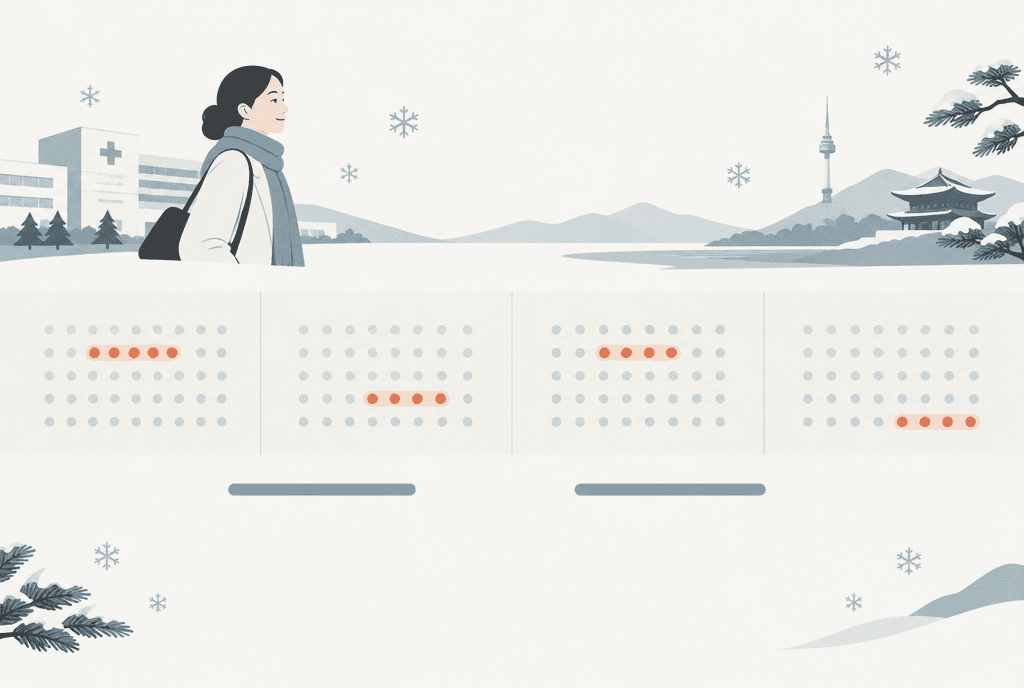
In winter, public holidays shake up a visit more than the weather does. The 2027 holidays below follow the 2027 calendar of public holidays that the Korea AeroSpace Administration announced in June 2026.
| Period | Weather and air | What to watch in your schedule | Where to check |
|---|---|---|---|
| November | The turn from autumn to winter. Temperatures can swing from day to day | No public holidays this month | Weather Nuri forecast |
| December | More days below freezing, and indoor air dries out easily. The seasonal fine dust program begins | Christmas (Friday, December 25, 2026) and the end of the year | Weather Nuri alerts, AirKorea |
| January | The coldest month of the year. Roads and stairs can freeze after snow | New Year holiday (Friday to Sunday, January 1 to 3, 2027) | Weather Nuri, clinic closure days |
| February | The cold continues | Seollal holiday (February 6 to 9, 2027, four days including a substitute holiday) | Korea AeroSpace Administration holiday calendar, clinic closure days |
Many clinics close or shorten their hours over holidays, and bookings can pile up right after a holiday ends. If your plan involves several clinic visits, such as a first consultation, the procedure and a follow-up check, start by marking them on a calendar to see whether a holiday falls between them. If your last follow-up lands on a holiday, you may need to change your flight home or move the appointment earlier. Around Seollal, many people in Korea travel to their hometowns, so transport can be crowded. How clinics close for holidays is covered in Korean Holidays and Clinic Hours: Check Before You Book Flights.
Heavy snow or bad weather can also delay flights. Rather than booking your flight home for the morning after your last appointment, leave about a day of slack, so you can rearrange things if the appointment runs late or the flight is delayed. When you book, also ask the clinic how to reach them if you need to move an appointment.
When your room is dry: heating, humidity and fresh air
The KDCA says it is very important to keep indoor humidity at 40 to 50% in winter and to air out rooms. Accommodation in Korea is often heated with ondol, a system that warms the floor, or with warm air from a heating and cooling unit, and running the heat for long stretches can dry the air even more. If you will spend most of the day in your room while you recover, the air in that room matters more than you might expect.
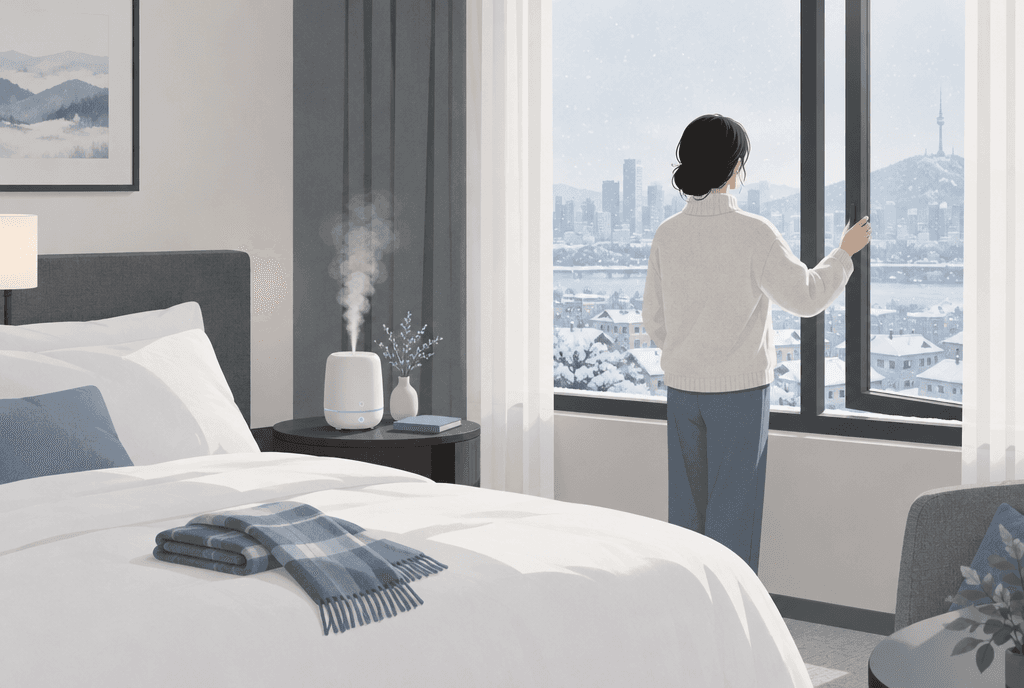
When you choose a place to stay or check in, ask:
- Whether you can adjust the room temperature yourself
- Whether the room has a humidifier, or whether you can borrow one
- Whether the windows open so you can air out the room
- Whether the walk from your accommodation to the clinic has hills or stairs
Other things to weigh when choosing where to stay during recovery (distance to the clinic, check-out time, elevators) are in Where to Stay After Treatment in Korea: Distance, Check-Out and Rooms.
What you can put on a treated area when it feels tight or dry, and when you can go back to your usual moisturizer or makeup, differ by procedure. Ask directly at your consultation, something like "My room will probably be dry in winter. What should I use?" If the clinic gives you an ointment or moisturizer, write down how often and how to apply it. If you plan to bring products from home, take a photo of the ingredient list so it is easy to show your doctor.
Cold and icy sidewalks: what to wear and how to walk
The KDCA's cold wave health guide recommends wearing several light, slightly loose layers and having a hat, gloves, a mask and a scarf. For shoes, it recommends waterproof ones with wide soles and anti-slip grooves. It advises avoiding icy paths where you can. If you have to walk on ice, bend slightly at the waist to lower your center of gravity and cut your speed and stride by 10 to 20%. Keep your hands out of your pockets while walking, and hold the handrail on stairs. The guide also points out that ice is not only a street problem: water on the marble or granite floors of building stairs and entrances can freeze into a thin, slippery layer. Take the same care on subway exit stairs and at the entrance of the building where your clinic is.
What you wear may change after treatment, too. A coat or top that opens at the front can be easier than clothes you pull over your head. Ask your doctor whether a scarf, hat, mask or glasses can touch or press on the treated area.
Heat packs (disposable hand warmers) are a winter staple in Korea. The Korea Consumer Agency warns that they can reach 70°C at their hottest and stay between 40 and 70°C for a long time, so sticking one directly on bare skin carries a high risk of burns. It also says not to use them while sleeping, and that people with sensitive skin should avoid them. Ask your doctor first whether you can put a heat pack or any warm compress on or near a treated area. Saunas, jjimjilbang (Korean bathhouses) and public baths, which many people visit in winter, are also on the list to check with your doctor: ask when you can go after treatment.
On snowy days, taxis can be hard to find and roads can be slow. On appointment days, leave earlier than usual, and look up a subway route in advance so you are not rushing.
UV does not go away in winter: snow, cloudy days and masks
On cold days it is easy to forget about the sun, but UV is still there in winter. The WHO explains that snow can reflect as much as 80% of UV radiation, and that fresh snow almost doubles the UV a person receives. Thin clouds barely reduce UV and can even raise it by scattering the rays.
If you were told to protect the treated area from UV after your procedure, do not skip it because it is winter. Follow your doctor's instructions on when to start using sunscreen, which kind to use, and whether to cover up with something like a hat as well. If you plan to go to a ski resort or a snowy mountain during recovery, bring that up at your consultation.
Many people wear masks in winter because of the cold and the fine dust. A mask's fabric or straps can touch a treated area, though, so ask your doctor whether you can wear one and from when.
The dry air on your flight home
The air on a plane is even drier than in your room. According to the WHO's guidance on health and air travel, cabin humidity is usually below 20%, lower than the 30% or more that is typical at home. That can dry out your skin and make your eyes, mouth and nose uncomfortable, but it is not a health risk. The same guidance says skin moisturizing lotion, a saline nasal spray to keep the inside of your nose moist, and wearing glasses instead of contact lenses can help with the discomfort, and it explains that low humidity does not cause dehydration.
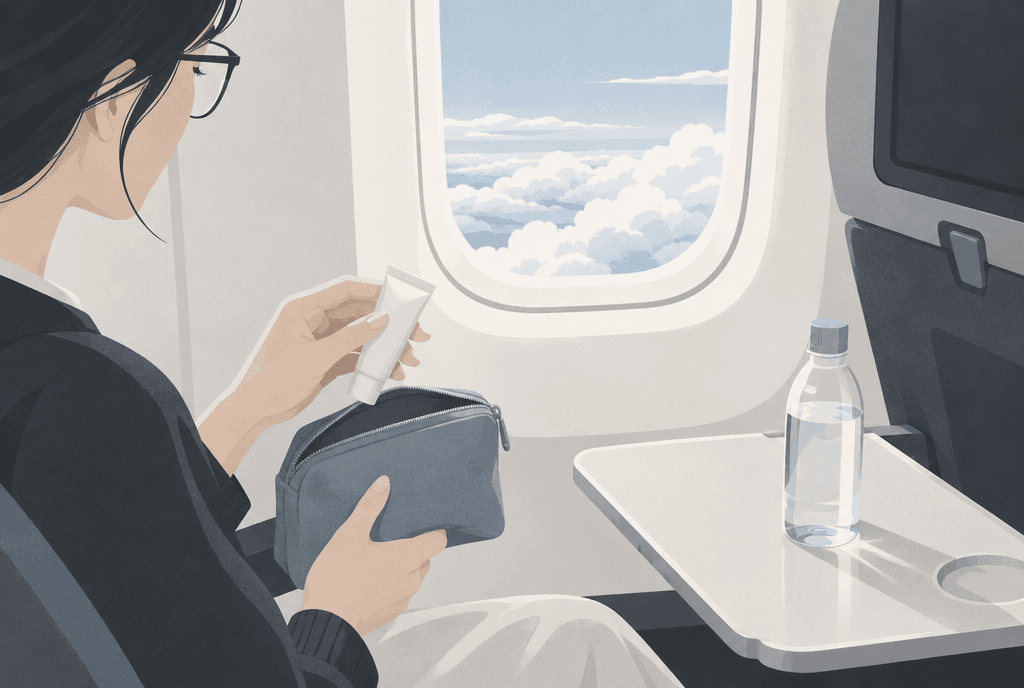
If you have had treatment, ask the clinic that treated you what you can put on the treated area during the flight and when you can fly. If you had eye treatment, follow your doctor's instructions on contact lenses and eye drops too. Keep any ointment or moisturizer your doctor gave you in your carry-on bag, not your checked luggage. For the rules on how much liquid you can bring on board, check with your airline and departure airport.
What Mediport does
Mediport is a government-registered foreign patient facilitator in Seoul (registration number A-2026-01-01-07030, Portzone Co., Ltd.). We are not a medical provider, so we do not decide how you care for yourself after treatment. When you plan a winter visit, we check with you whether your clinic dates overlap with holidays or closure days, and we help you list, in a language you are comfortable with, the winter questions to ask your doctor at your consultation (dry rooms, moisturizers, sun protection, heat packs, when to fly). For accommodation, we only explain what to check when you choose; we do not book it. For aftercare, follow the instructions of the clinic that treated you.
Frequently asked questions
- Q. Is it okay to get treatment in Korea in winter?
- A. The season alone does not decide it. Which procedure you can have and when is something your doctor judges based on the type of procedure and your health. If you are coming in winter, build the dry indoor air, the cold and icy sidewalks, and the Christmas, New Year and Seollal holidays into your schedule, and ask at your consultation whether anything about your aftercare changes because it is winter.
- Q. When is the Seollal (Lunar New Year) holiday in 2027?
- A. According to the 2027 holiday calendar announced by the Korea AeroSpace Administration, Seollal falls on February 7, and the holiday runs four days, from Saturday, February 6 to Tuesday, February 9, including a substitute holiday. Many clinics close or shorten their hours during this time and bookings can pile up afterward, so confirm your appointment dates directly with the clinic.
- Q. What should I do if my room is very dry?
- A. The KDCA advises keeping indoor humidity at 40 to 50% in winter and airing out rooms. Ask your accommodation whether you can adjust the room temperature, borrow a humidifier and open the windows. For what to put on a treated area when it feels dry, follow the instructions of the doctor who treated you.
- Q. Do I still need sun protection in winter?
- A. The WHO explains that snow can reflect as much as 80% of UV radiation and that thin clouds barely reduce UV. If you were told to protect the treated area from the sun after treatment, keep doing it in winter, and check with your doctor about when to start sunscreen and which kind to use.
- Q. Can I use heat packs?
- A. The Korea Consumer Agency warns that heat packs stay between 40 and 70°C for a long time, so putting one on bare skin carries a high risk of burns. It advises not sticking them on bare skin and not using them while sleeping. Ask your doctor first whether you can put a heat pack or warm compress on or near a treated area.
- Q. What if my skin gets dry on the flight home?
- A. According to the WHO, cabin humidity is usually below 20%, so your skin, eyes and nose can dry out, and moisturizing lotion or wearing glasses can ease the discomfort. Ask the clinic that treated you what you can put on the treated area during the flight and when you can fly, and keep any ointment or moisturizer you were given in your carry-on bag.
This article is for general information only. Results vary by individual, and whether a procedure is suitable is a physician's decision. Please ask in a free consultation for details.
Related articles

How consultation & interpretation work
Start with a free consultation
Tell us your goals, schedule and concerns. We'll reply within 24 hours, in your language.
Start a free consultation